Il framework Thriving Schools offre alle scuole un approccio strutturato per sostenere il benessere di studenti e insegnanti e promuovere un ambiente scolastico positivo. Anziché considerare il benessere come un’attività separata, il framework supporta le scuole nell’integrarlo nella didattica quotidiana, nelle relazioni, nelle routine e nelle pratiche scolastiche.
Il benessere è influenzato da numerosi fattori tra loro interconnessi, tra cui le relazioni, il clima scolastico, le esperienze in classe, il supporto al personale e le opportunità di partecipazione. Per questo motivo, il framework adotta un approccio che coinvolge l’intera scuola (Whole School Approach) includendo studenti, insegnanti, dirigenti scolastici, personale non docente e famiglie nella costruzione di un ambiente scolastico sicuro, accogliente e inclusivo.
All’interno di questo approccio che coinvolge l’intera scuola, il framework Thriving Schools integra tre modelli complementari:
- PERMA
- Apprendimento Socio-Emotivo
- Alcuni Elementi dello School-wide Positive Behaviour Support (SWPBS).
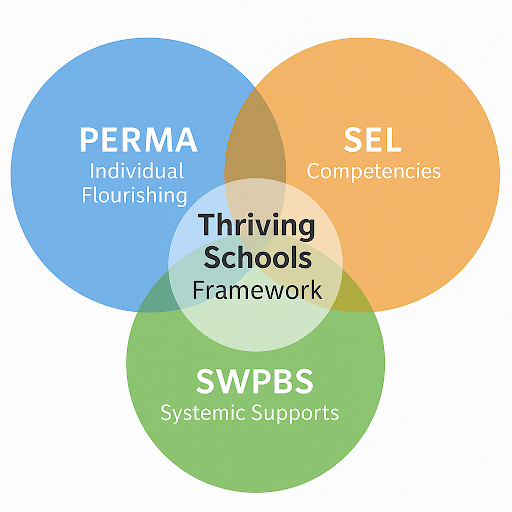
Ciascun modello offre un contributo specifico, ma insieme forniscono un approccio pratico per comprendere il benessere, sviluppare competenze sociali ed emotive e integrare in modo coerente pratiche positive in tutta la scuola.
1. PERMA: Quali elementi del benessere stiamo cercando di sostenere?
La prima componente del framework si basa sulla Psicologia Positiva, un approccio che pone l’attenzione sui punti di forza, sulle esperienze e sulle condizioni che aiutano individui e comunità a prosperare. Questo non significa ignorare le difficoltà o aspettarsi che le persone si sentano sempre positive. Al contrario, incoraggia le scuole a riflettere su ciò che favorisce un funzionamento positivo e il benessere, rispondendo al tempo stesso in modo adeguato alle difficoltà quando si presentano.
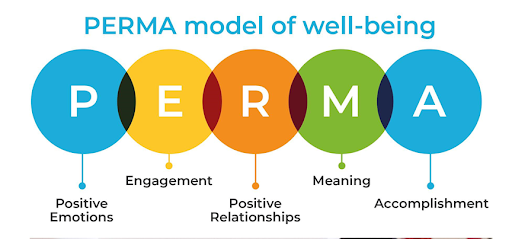
Al centro di questo approccio si trova il modello PERMA di Seligman, che descrive il benessere attraverso cinque dimensioni: Emozioni Positive, Coinvolgimento, Relazioni, Significato e Realizzazione (Seligman, 2012). Il framework Thriving Schools applica queste dimensioni sia agli studenti sia agli insegnanti.
- Emozioni Positive comprendono esperienze come gioia, gratitudine, interesse e speranza.
- Coinvolgimento si riferisce all’essere pienamente partecipi e assorbiti in attività che ci interessano e ci mettono alla prova.
- Relazioni si riferiscono a legami positivi e di supporto, fondati sulla fiducia e sul senso di appartenenza.
- Significato implica percepire che ciò che facciamo abbia valore e uno scopo.
- Realizzazione riguarda il perseguimento di obiettivi, il riconoscimento dei progressi e il raggiungimento di risultati.
Nel loro insieme, questi elementi offrono alle scuole un modo semplice per riflettere sul benessere. Per uno studente, il benessere può derivare dal sentirsi parte del gruppo classe, dall’essere profondamente coinvolto in un’attività di apprendimento o dal provare soddisfazione per i propri progressi. Per un insegnante, può invece significare poter contare su relazioni professionali di supporto, trovare senso nel proprio lavoro o riconoscere i risultati raggiunti in classe.
Understanding what we want to strengthen is only part of the picture. Students also need social and emotional skills that help them manage emotions, build relationships and participate positively in school life. This is where SEL comes in.
## 2. SEL: Quali competenze aiutano gli studenti a sostenere il proprio benessere?
Il **Social and Emotional Learning (SEL)** si concentra sullo sviluppo di competenze che gli studenti possono utilizzare sia a scuola sia nella vita quotidiana. Tra queste rientrano la consapevolezza di sé, la gestione di sé, la consapevolezza sociale, le competenze relazionali e la capacità di prendere decisioni responsabili (Cipriano et al., 2023). In termini semplici, il modello PERMA aiuta a individuare le dimensioni fondamentali del benessere, mentre il SEL sostiene lo sviluppo delle competenze che possono aiutare gli studenti a promuoverle e rafforzarle.
Prendiamo, ad esempio, la dimensione **Relazioni** del modello PERMA. Una scuola può voler promuovere relazioni più solide tra gli studenti e rafforzare il loro senso di appartenenza. Il SEL sostiene questo obiettivo aiutando gli studenti a sviluppare e mettere in pratica competenze quali l’empatia, la comunicazione, la cooperazione, l’ascolto attivo e modalità costruttive di gestione dei disaccordi.
La stessa connessione può essere osservata nella dimensione del **Coinvolgimento**. Competenze come la consapevolezza di sé e la regolazione emotiva possono aiutare gli studenti a riconoscere quando sono distratti, frustrati o in difficoltà e a sviluppare strategie per rimanere coinvolti nel processo di apprendimento.
Il framework, quindi, non considera le competenze sociali ed emotive come qualcosa che gli studenti debbano semplicemente possedere. Al contrario, queste competenze possono essere **insegnate in modo esplicito, esercitate e consolidate**, proprio come avviene per altri ambiti dell’apprendimento. All’interno del framework, il SEL è integrato nella didattica, nella cultura scolastica, nelle relazioni e nelle routine quotidiane. In questo modo, contribuisce a tradurre obiettivi più ampi legati al benessere in competenze concrete che gli studenti possono apprendere e mettere in pratica. Tuttavia, insegnare queste competenze non significa automaticamente che vengano applicate in modo coerente in tutta la scuola. È qui che entra in gioco il
## 3. SWPBS: Come possiamo integrare il benessere nelle pratiche scolastiche quotidiane?
Un insegnante può proporre un’attività sul benessere durante una lezione o lavorare con la classe su una competenza SEL, ma come può tutto questo diventare parte del modo in cui funziona **l’intera scuola**?
Il **School-wide Positive Behaviour Support (SWPBS)** si concentra sulla creazione di ambienti scolastici proattivi, coerenti e di supporto. Anziché focalizzarsi principalmente sulla gestione dei comportamenti inappropriati dopo che si sono verificati, il SWPBS incoraggia le scuole a definire con chiarezza quali siano i comportamenti positivi attesi, a insegnarli in modo esplicito, a rafforzarli e a utilizzare le informazioni su ciò che accade nella scuola per orientare le azioni future (Sugai & Simonsen, 2012).
È importante sottolineare che **Thriving Schools non adotta integralmente il framework SWPBS**. Ne utilizza in modo selettivo alcuni elementi che possono aiutare le scuole a tradurre i principi del benessere in pratiche quotidiane coerenti e condivise. Tra questi rientrano:
- creare una filosofia ed una finalità condivisa;
- definire con chiarezza ed insegnare i comportamenti attesi;
- incoraggiare i comportamenti positivi;
- monitorare i progressi; e
- sostenere le insegnanti attraverso percorsi di sviluppo professionale.
Questi elementi forniscono le strutture a livello di intera scuola attraverso cui PERMA e SEL possono andare oltre le singole attività. Ad esempio, se una scuola identifica le relazioni positive come una priorità, può concordare aspettative condivise, come mostrare empatia, aiutare gli altri e ascoltare con rispetto. Gli insegnanti possono insegnare e mettere in pratica esplicitamente questi comportamenti con gli studenti. Le interazioni positive possono essere riconosciute e incoraggiate, mentre la scuola può monitorare il modo in cui gli studenti vivono le relazioni e osservare se cambiano le dinamiche di conflitto tra pari.
## Come si integrano PERMA, SEL e SWPBS?
Ciascun approccio contribuisce a rispondere a una domanda diversa:
- PERMA: quali dimensioni del benessere vogliamo rafforzare?
- SEL: What skills help students work towards these goals?
- SWPBS: come possono le scuole rendere queste pratiche coerenti e continuative nella vita scolastica quotidiana?
Un semplice esempio mostra come questi tre approcci possano integrarsi nella pratica. Una scuola vuole rafforzare le relazioni positive.
- PERMA identifica l’obiettivo di benessere. La scuola si concentra sulla dimensione delle Relazioni, con particolare attenzione alla fiducia, alla connessione e al senso di appartenenza.
- Il SEL sviluppa le competenze. Gli studenti esercitano l’empatia, l’ascolto attivo, la cooperazione e una comunicazione costruttiva.
- l SWPBS sostiene una pratica coerente e condivisa. La scuola concorda aspettative comuni, come “Mostra empatia” o “Aiuta gli altri a riuscire”. Gli insegnanti insegnano esplicitamente questi comportamenti, riconoscono e incoraggiano le interazioni positive e monitorano i cambiamenti nelle relazioni tra pari e nel clima scolastico.
Questo esempio mette in evidenza una caratteristica fondamentale del framework Thriving Schools: una singola attività sul benessere, da sola, non è sufficiente a generare un cambiamento duraturo. Il framework collega attività, competenze, routine, relazioni e pratiche condivise a livello di intera scuola, affinché il benessere diventi parte integrante del modo in cui la scuola funziona.
Cosa significa il framework Thriving Schools nella vita scolastica quotidiana?
Per gli insegnanti, il framework Thriving Schools non significa aggiungere un programma sul benessere completamente separato a una giornata scolastica già ricca di attività. Molti dei suoi principi possono essere integrati nelle pratiche didattiche e scolastiche già esistenti: concordare aspettative condivise, insegnare agli studenti ad ascoltare e collaborare, riconoscere l’impegno e i progressi, parlare delle emozioni, creare occasioni di riflessione e verificare regolarmente come gli studenti vivono l’esperienza scolastica.
Il framework riconosce inoltre che sostenere gli studenti significa anche sostenere gli insegnanti. Lo sviluppo professionale, la collaborazione, il mentoring, le opportunità di riflessione e l’attenzione al benessere del personale contribuiscono tutti alla costruzione di un approccio sostenibile che coinvolge l’intera scuola. Lo sviluppo professionale del personale dovrebbe quindi essere continuo e collegato ai bisogni della scuola, piuttosto che essere considerato come un’attività formativa isolata.
Nel loro insieme, gli elementi del PERMA, SEL SWPBS, offrono alle scuole una struttura pratica per rendere il benessere intenzionale, condiviso e parte integrante della vita scolastica quotidiana.
Leggi il framework completo di Thriving Schools per approfondire attività pratiche rivolte a insegnanti e studenti, indicazioni per l’implementazione, esempi di comportamenti attesi e routine, modalità di monitoraggio e risorse pronte all’uso per le scuole
References
Cipriano, C., Strambler, M. J., Naples, L. H., Ha, C., Kirk, M., Wood, M., Sehgal, K., Zieher, A. K., Eveleigh, A., McCarthy, M., Funaro, M., Ponnock, A., Chow, J. C., & Durlak, J. (2023). The state of evidence for social and emotional learning: A contemporary meta-analysis of universal school-based SEL interventions. Child Development, 94(5), 1181–1204. https://doi.org/10.1111/cdev.13968
Seligman, M. E. (2012). Flourish: A visionary new understanding of happiness and well-being. Simon & Schuster.
Sugai, G., & Simonsen, B. (2012). Positive behavioral interventions and supports: History, defining features, and misconceptions. PBIS Center, University of Connecticut.